Plateful Titanium Pro Pan Review: Is It Actually Worth $149?

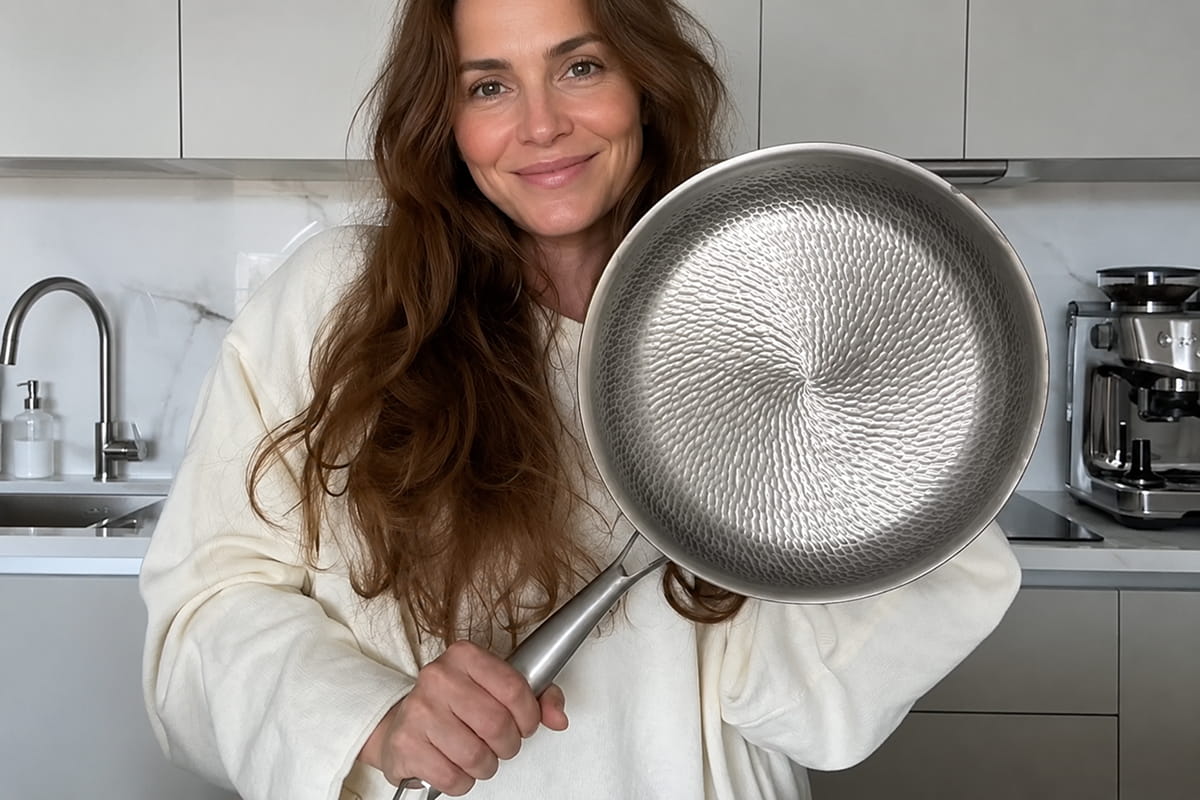
I bought the Plateful Titanium Pro Pan because I was tired of throwing out flaking nonstick pans every year and worrying about what was ending up in my family's food. I've cooked on it almost every day for six weeks. Here's the honest verdict, the good and the annoying, so you can decide fast.
Plateful Titanium Pro Pan: the pros and cons
What I liked
- Pure titanium, no chemical coating: nothing to scratch off into your food, no PFOA, PFAS or PTFE.
- Eggs released cleanly every morning once I learned the technique.
- Survives everything: metal forks, steel wool, the dishwasher, none of it left a mark.
- No more replacing pans. There's no coating to wear out, so there's nothing to expire.
- Genuinely one pan for everything: eggs at breakfast, a hard steak sear at dinner, straight into the oven to finish.
- Lighter than I expected and comfortable to move around the stove, even full.
- Heats fast and evenly, with no cold spots where food cooks unevenly.
- No hot-pan smell my old nonstick used to give off when it got hot.
What I didn't
- There's a learning curve. You need a little oil and a proper preheat. Skip that and food sticks.
- It's not an instant nonstick like a fresh coated pan. It cooks like a real pan, which took me a few days to adjust to.
- I paid full price. I bought mine before they started running the discount that's on right now, so I paid more than you probably will. A little annoying, but it was still worth it to me.
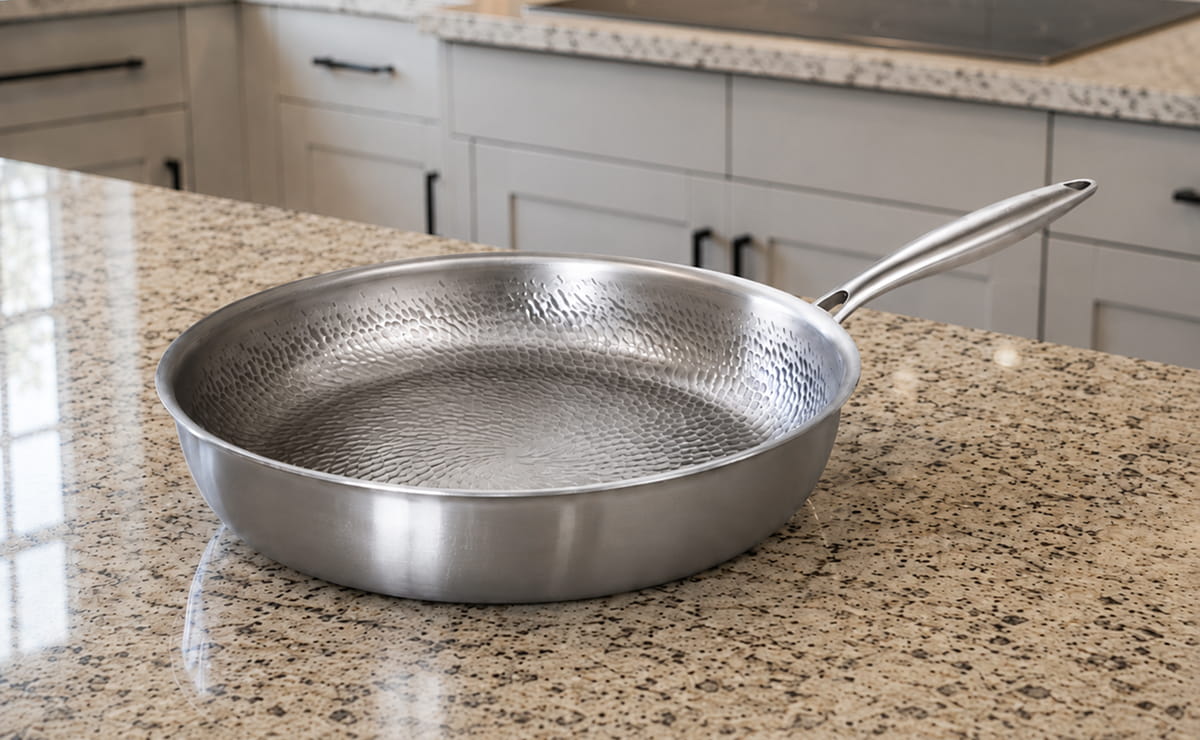
→ Just want to check the price and see the pan? Here's the page I ordered mine from. Otherwise, my full breakdown is below.
Is the Plateful pan worth the money?
For me, yes. Here's the math that got me there.
I added up the cheap pans I'd bought over four years. Four of them, thirty to forty bucks each, dead every twelve months. Plus two "nicer" sixty-dollar ones that also flaked out. That's well over $200 replacing pans. And the whole time I was still cooking on a scratched, shedding surface.
So the price isn't really a splurge. It's what you'd have spent anyway, paid once, on something that doesn't fall apart.
And honestly? I'm a little jealous of anyone buying now. I paid the full price when I got mine. There was no discount running back then. Last time I checked they had a promotion on, which is less than I paid. If it's still live when you read this, that's a better deal than I got.
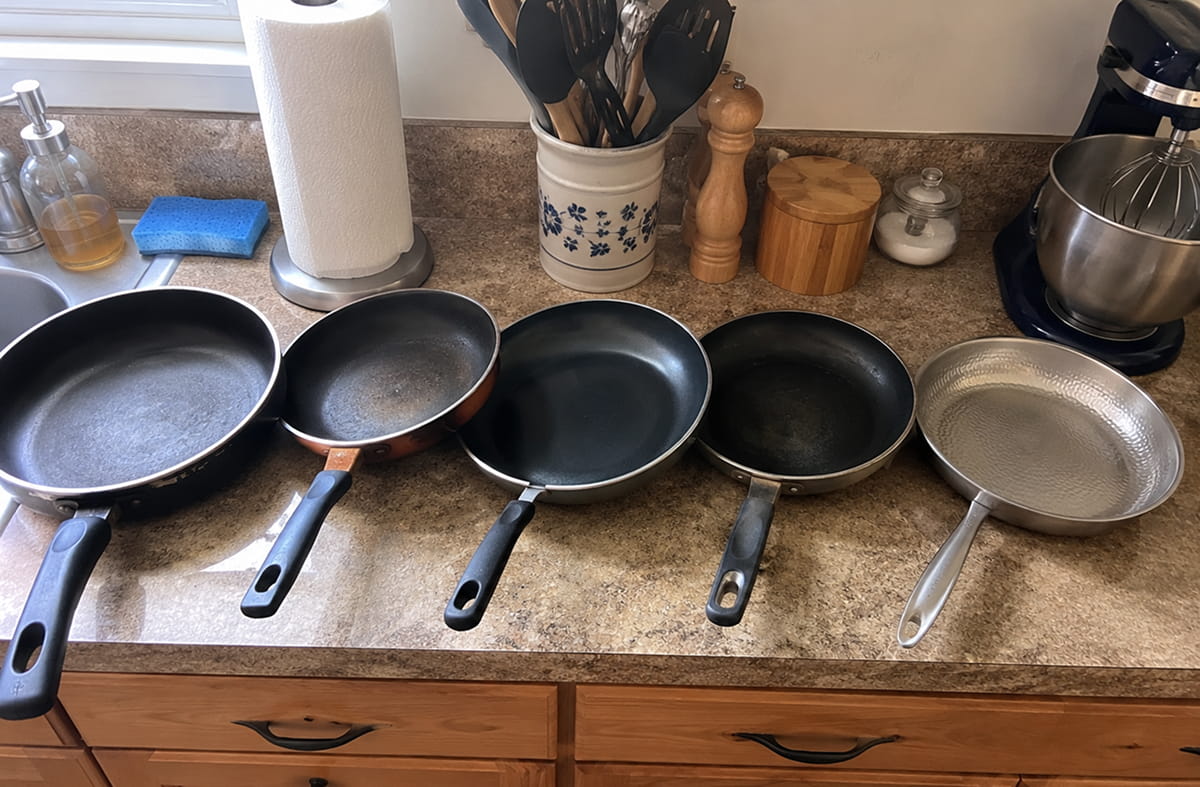
What's actually in your old nonstick pan?
This is the part that pushed me to try anything at all.
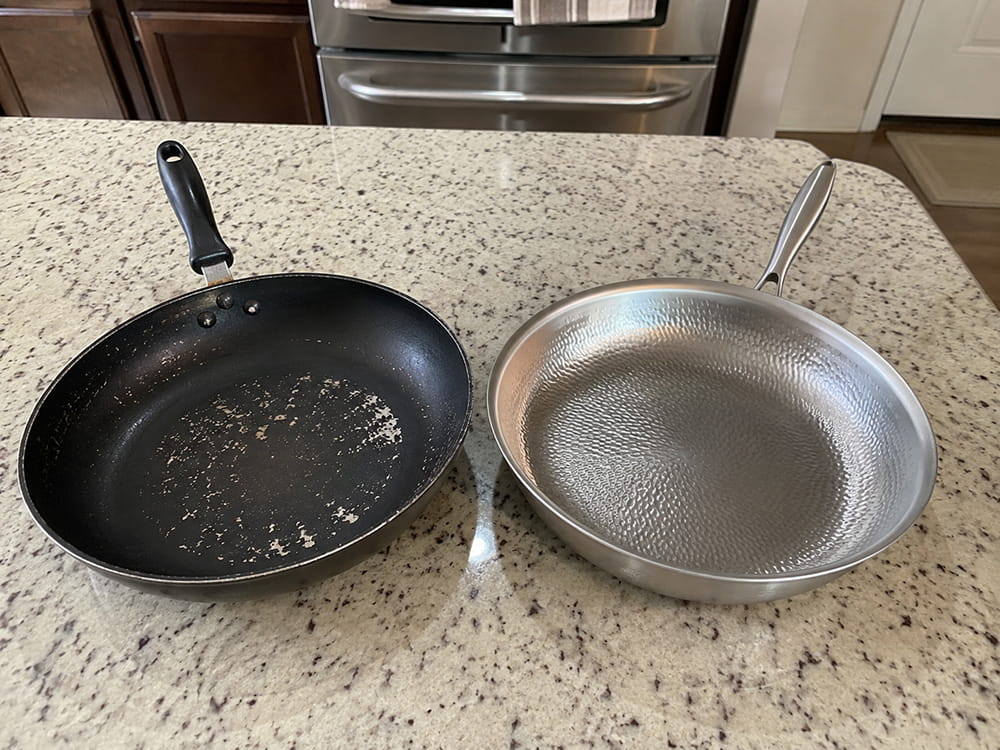
Most nonstick pans work because of a chemical coating. That coating is the whole trick, it's why the egg slides. And that coating is designed to wear off. Every time you scrape it with a spatula or run it through the dishwasher, a little breaks down.
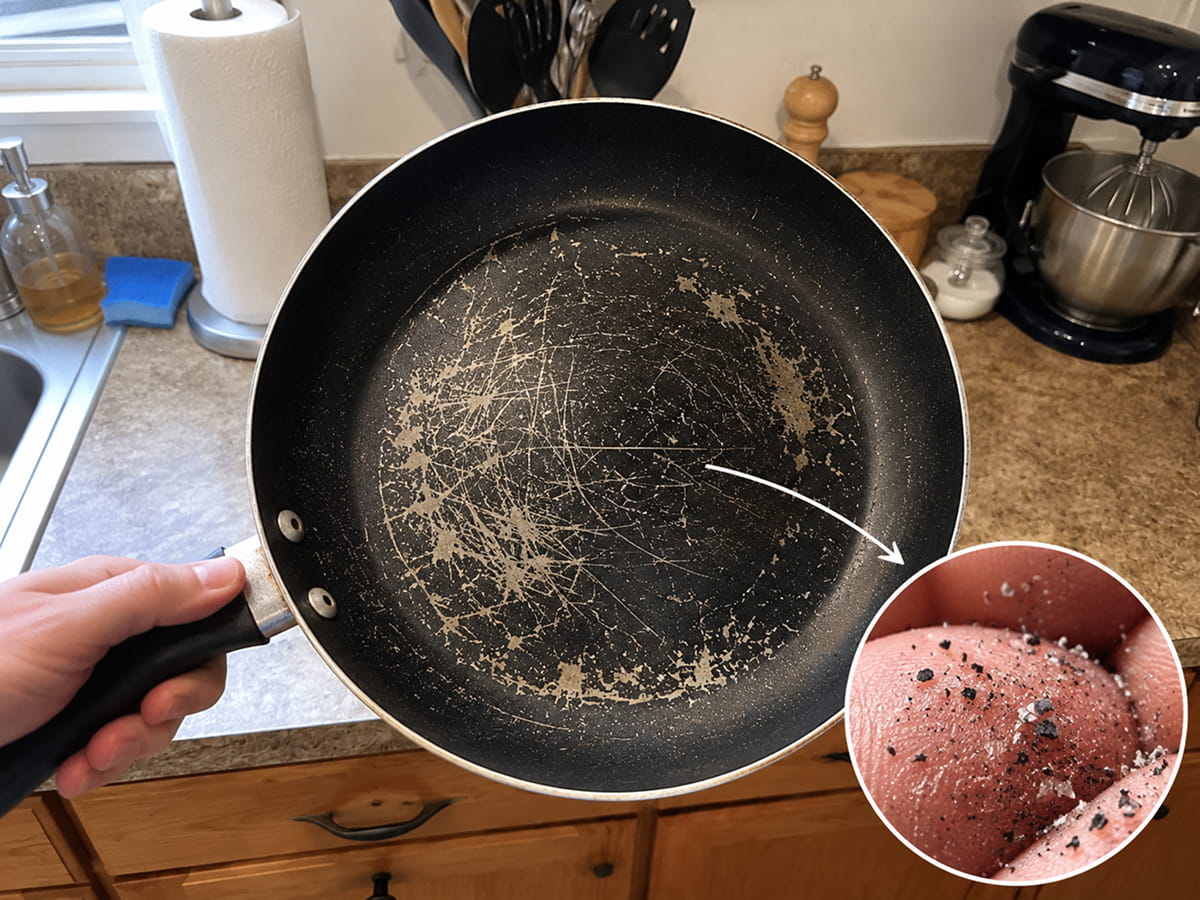
PFOA, PFAS, PTFE, "forever chemicals." All the scary words point back to the same thing. Once the coating is scratched, you're not cooking on a nonstick pan anymore. You're cooking on a pan that's shedding into your food.
I held my old one up to the light. Scratches everywhere, a few spots worn down to gray metal. I'd been eating off it for over a year.
What makes the Plateful pan different?
The Plateful pan is pure titanium with no coating at all.
No coating means nothing to scratch off, and nothing to break down into your food when it gets hot. The food release comes from the metal itself and how the surface is finished, not from a layer sprayed on top that's counting down to failure.
The trade-off is that it doesn't behave like a chemical nonstick. It cooks like a proper pan. More on that below.
What buyers actually say
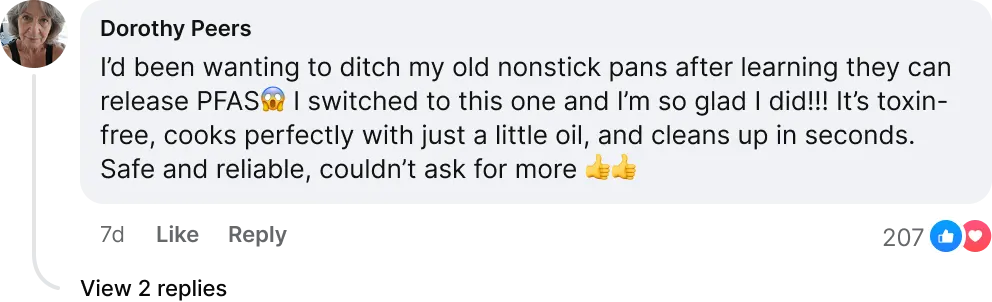
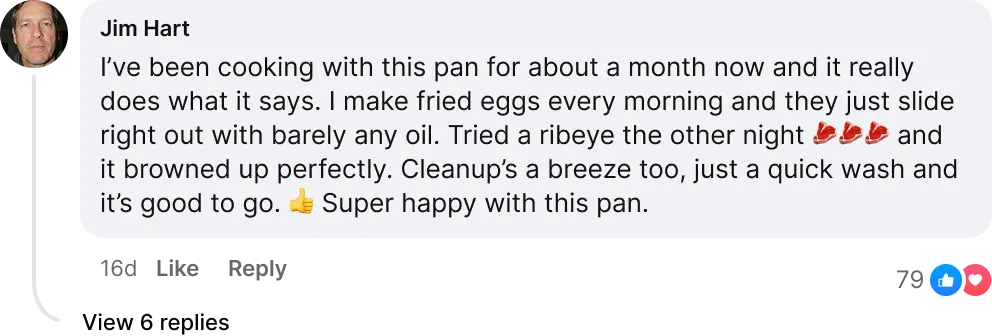
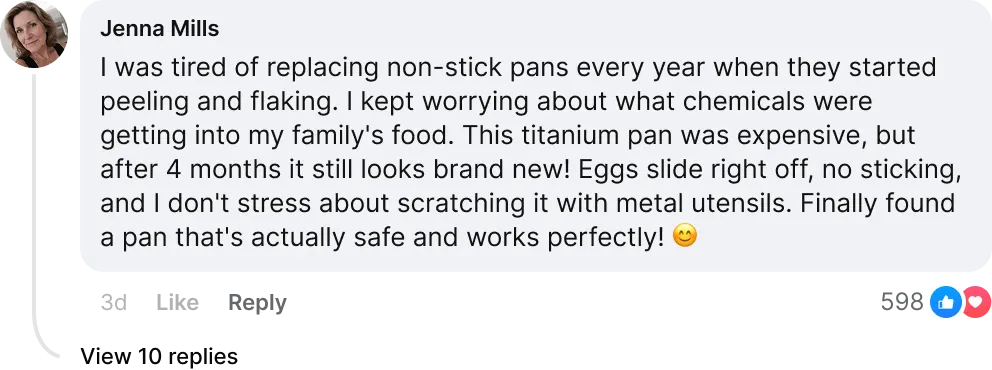
Plateful's Titanium Pro Pan holds a 4.69 out of 5 across 3,165 verified reviews. Here's a sample of what people write once they've cooked on it for a few months.
“Love having the confidence that no harmful chemicals are getting into our food.”
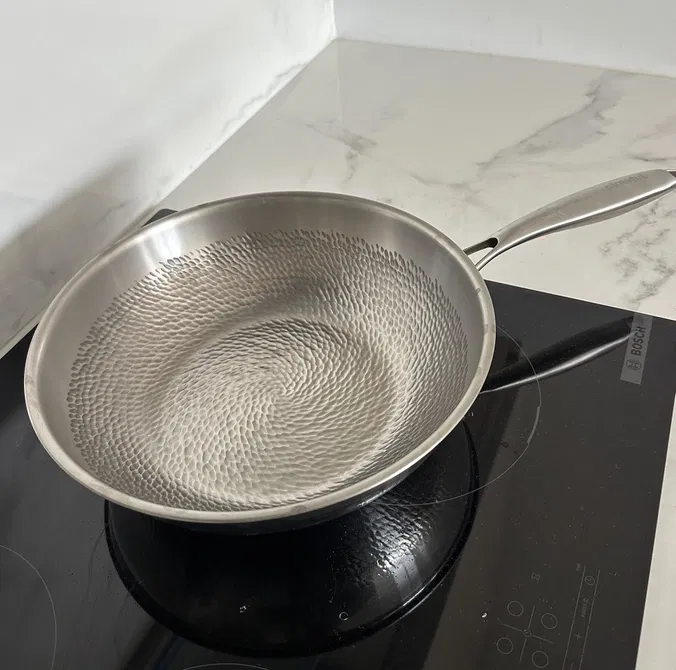
“I started with one pan and immediately came back for the full set. At first it felt expensive, but after using it, I get it. The peace of mind alone is worth it.”
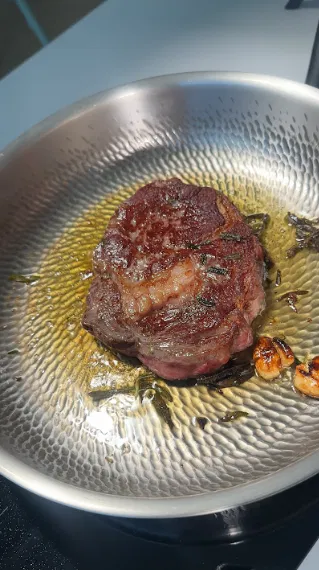
“I went through three ceramic pans in two years. This one's been in my kitchen for eight months and it still cooks exactly the same as the day it arrived.”
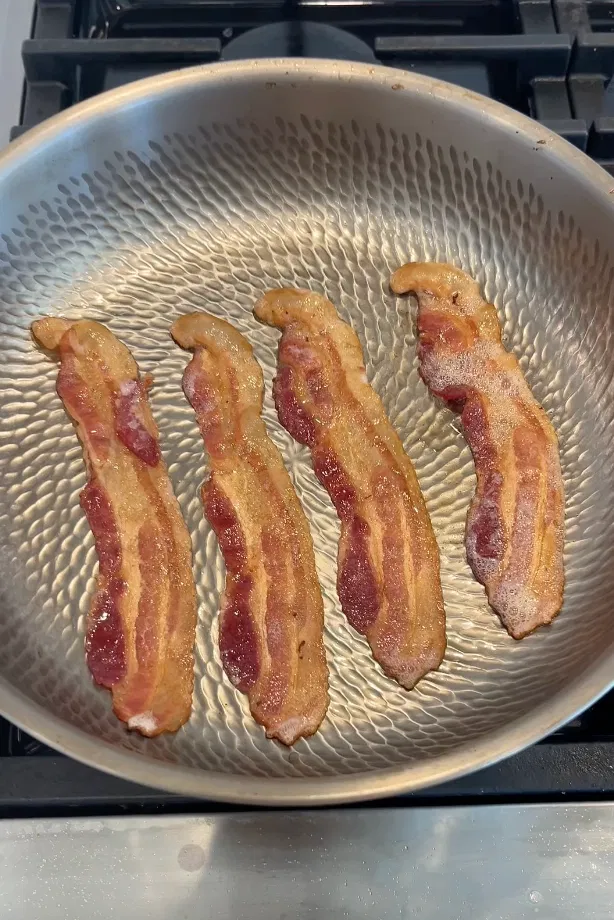
How did it hold up? My 6-week test
I didn't baby it. The point was to see if it survives real life.
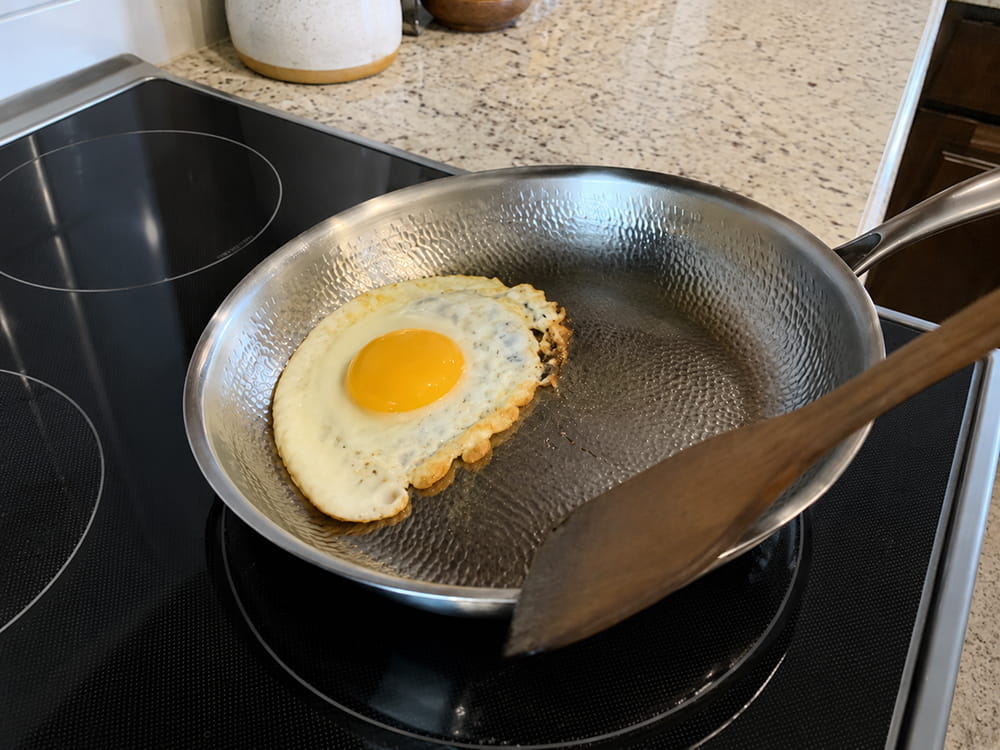
Eggs. Medium heat, a teaspoon of oil, two eggs. They set, I gave the pan a shake, and they slid. One nudge with a spatula and they came right up. I did this most mornings for six weeks and it never got worse.
Metal utensils. I dragged a metal fork across it on purpose. No scratch, no damage. There's no coating to gouge.
Dishwasher and steel wool. Steel wool on stuck-on cheese, then straight into the dishwasher. Came out fine. My old pans would've been toast.
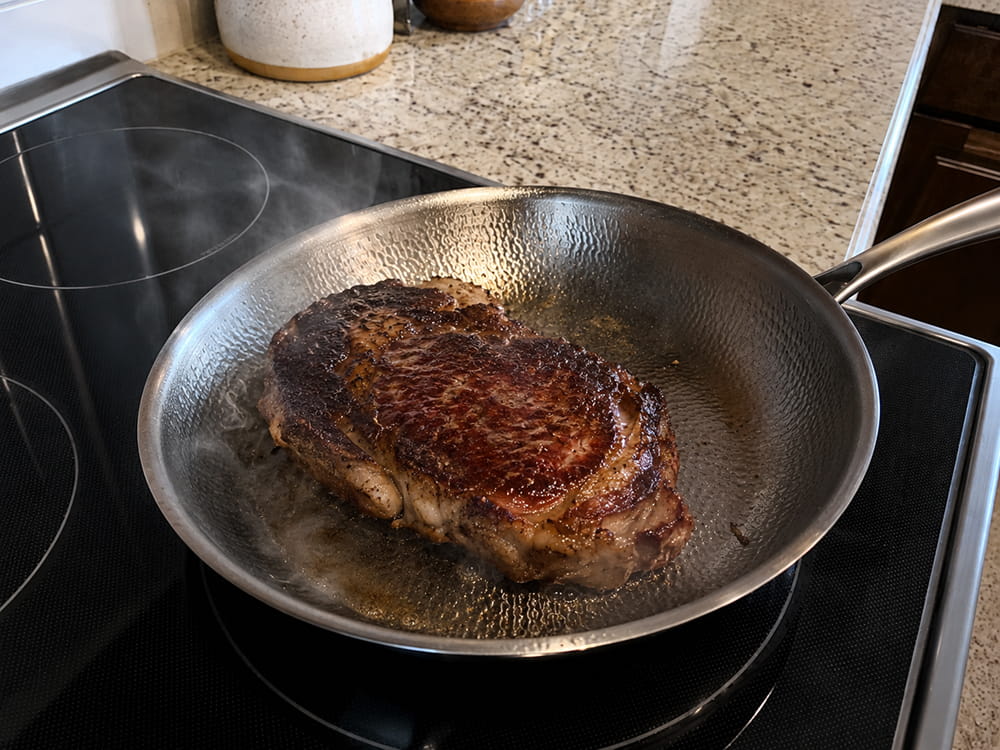
High heat. Screaming hot for a steak sear, then a batch of stir-fry. No warping, no hot spots, and no weird smell.
The catch: there's a break-in period
I want you to know the exact thing that annoyed me in week one, because it's the reason some people leave bad reviews.
I tried to fry an egg the lazy way I always did on my old nonstick: dry pan, no fat, high heat. It stuck. For about a day I thought I'd wasted $150.
Then it clicked. This pan wants a thin film of oil or butter and a proper preheat. Let it come up to temperature first, cook on medium, and the sticking just stops. If you expect to cook bone-dry on max heat like a chemical nonstick, this is the wrong pan, and I'd rather tell you now than have you find out after you buy.
Is it real titanium?
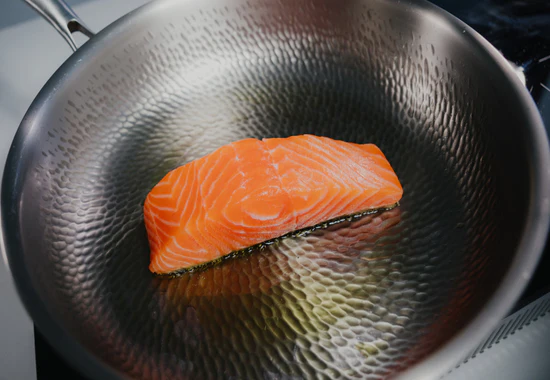
Yes. Pure titanium, not a titanium-colored coating over aluminum. This matters, because a lot of "titanium" pans just mean a titanium additive mixed into a coating, which still wears off. Confirm the material details on the product page so you know exactly what you're getting.
Is it actually non-toxic?
The cooking surface is bare titanium with no PFOA, PFAS or PTFE. Nothing is sprayed on, so there's no coating to break down into your food. That's the entire reason I bought it.
How does it compare to what you're using now?
vs a cheap nonstick pan: No contest on safety and lifespan. The cheap pan is easier on day one, then it scratches, sheds and gets replaced within a year. The Plateful doesn't have that expiration date.
vs a "PFOA-free" or ceramic pan: Those still rely on a coating that fades in months. Titanium has no coating to lose, so metal utensils and the dishwasher don't kill it.
vs bare stainless steel: Stainless is safe and tough too, but food sticks more without a lot of fat and skill. The titanium surface releases food better while still handling metal utensils and high heat.
Who it's for (and who should skip it)
Buy it if you:
- Want to get chemical coatings out of your kitchen for good.
- Are tired of replacing flaking pans every year.
- Cook for a family and care what's touching their food.
- Don't mind a short learning curve to own a pan that lasts.
Skip it if you:
- Want effortless nonstick the second it comes out of the box.
- Only ever cook delicate eggs with zero oil.
- Aren't ready to spend on a pan upfront, even if it saves money later.
My verdict
I went in trying to prove it wasn't worth it. Six weeks later my old pans are in a box by the door and I cook on this one every day.
If your nonstick pans are scratched or flaking, or you just don't love the idea of a coating breaking down into the food you make for your kids, this is the first "safe" pan I've used that I actually want to cook on. Just go in knowing it cooks like a real pan, not a chemical shortcut.
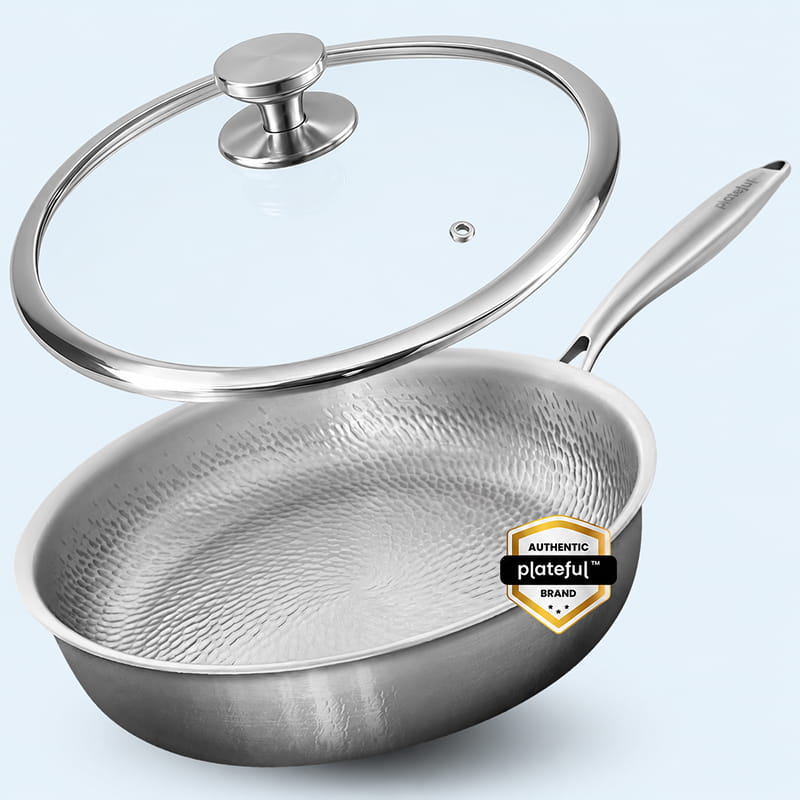
The one I tested was the Plateful Titanium Pro Pan.
See the Plateful Titanium Pro Pan I tested
Pure titanium. No coating to flake. 90 Days Money-back guarantee.
 Check Availability & Price →
About the author: Sarah Kessler has been cooking for a family of four for over a decade and has replaced more cheap pans than she'd like to admit. She writes hands-on kitchen reviews for MyHealthyKitchen.