New CDC Data Reveals PFOA in 98% of Americans, Scientists Trace Contamination to One Common Kitchen Item
A joint investigation reviewing two decades of CDC biomonitoring data has pinpointed an unexpected source of widespread chemical contamination in American households. Researchers say most consumers have never been warned.

ATLANTA, Newly compiled data from the Centers for Disease Control's National Health and Nutrition Examination Survey is raising fresh alarm among environmental health researchers. According to CDC findings, perfluorooctanoic acid (PFOA) has been detected in the blood of approximately 98% of Americans tested.
The Environmental Protection Agency classifies PFOA as a "likely carcinogen" with links to thyroid disease, liver damage, kidney cancer, immune system problems, and reproductive issues.
For years, the source of this near-universal contamination remained unclear. Industrial runoff, contaminated drinking water, and food packaging were the primary suspects. But a growing body of peer-reviewed research is now pointing to a different culprit, one sitting in nearly every American kitchen.
The Discovery That's Forcing a Rethink
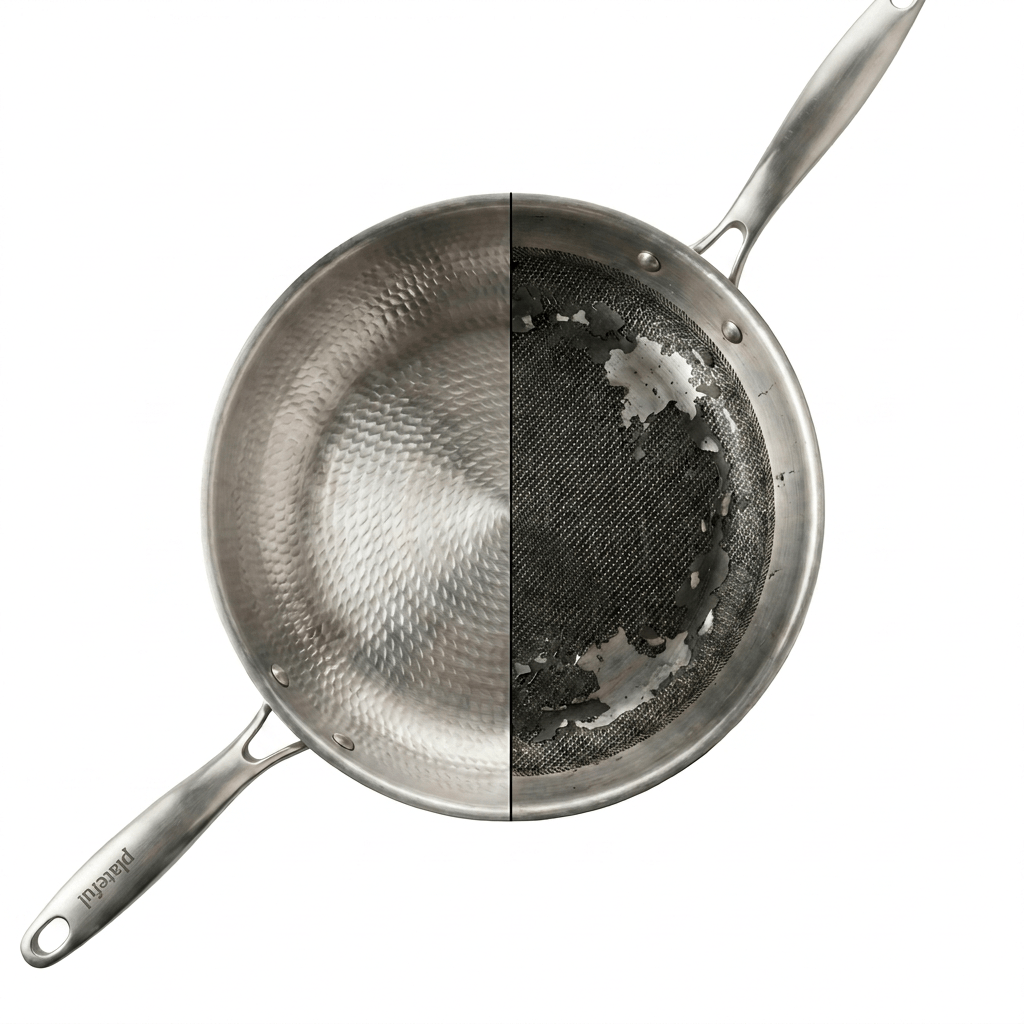
A 2018 study published in Environmental Health Perspectives found that 95% of non-stick cookware tested released PFOA particles when heated above 464°F. That temperature is easily reached during normal stovetop cooking, particularly when preheating empty pans or searing meat.
"This wasn't on our radar a decade ago" said one environmental health researcher familiar with the data. "We were looking at industrial sites and drinking water. Nobody thought to look at the pan you cook eggs in every morning."
What the research uncovered was disturbing. When traditional non-stick coatings reach high heat, microscopic amounts of PFOA and related per- and polyfluoroalkyl substances (PFAS) are released, both into the food being cooked and into the air being breathed.
A particularly alarming finding came from veterinary literature. Laboratory tests have shown that pet birds exposed to fumes from overheated non-stick cookware die within minutes from severe respiratory failure.
"If a coating is killing birds in the same room as the stove" noted one toxicologist"we should at least be asking what it's doing to humans over decades of daily exposure."
The "Safe Alternative" Problem
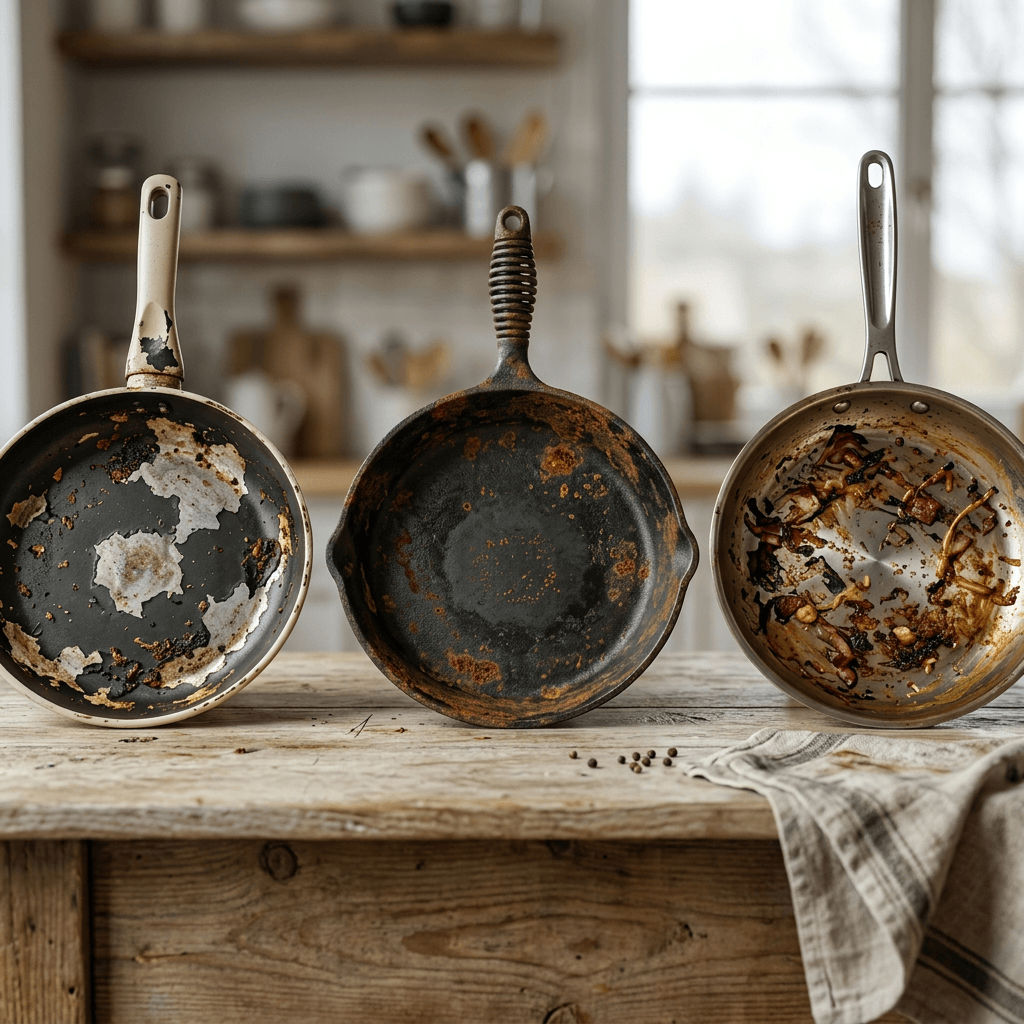
As awareness of PFOA has grown, consumers have turned to alternatives. But researchers say most of these come with their own serious issues.
Ceramic-coated pans: Marketed as a safer option, but the non-stick layer typically chips off within months. Once damaged, food sticks to exposed metal, and microparticles of the ceramic coating end up in food.
Cast iron: Genuinely chemical-free, but heavy, prone to rust, requires constant seasoning, and cannot be used with acidic foods. For older Americans, the weight alone makes daily use impractical.
Stainless steel: Safe in many respects, but requires significant amounts of cooking oil to prevent sticking, adding hundreds of unnecessary calories per meal. Some lower-grade stainless steel can also leach trace metals like nickel and chromium into acidic foods.
"Consumers have been stuck choosing between toxic and impractical" said one materials scientist. "That's been the problem for decades."
The Breakthrough Hidden in Hospital Operating Rooms

The breakthrough, researchers say, came from an unexpected place, medical implant technology.
Medical-grade titanium has been used in hip replacements, knee implants, dental screws, and cardiac devices for decades. The material was selected for one critical reason: it is one of the few substances that the human body does not react to at all. It is, by the strictest definition, biocompatible.
The question that occurred to researchers was straightforward: if pure titanium is safe enough to be placed permanently inside human bodies, why isn't it being used for the cookware that touches our food every day?
The answer turned out to be cost and manufacturing complexity. Pure titanium is significantly harder to work with than aluminum or stainless steel, and historically the price point was prohibitive for consumer cookware.
That changed two years ago.
The Lotus Leaf Principle

A company called Plateful developed a manufacturing process to produce a cooking pan from pure medical-grade titanium at a consumer-accessible price point. They named it the Titanium Pro Pan™.
The breakthrough wasn't just the material. It was solving the non-stick problem without using any coatings at all.
Their solution came from biomimicry. The lotus leaf, found in tropical wetlands, has a remarkable property: water and dirt simply slide off its surface, leaving it perfectly clean. This isn't due to any coating. It's due to microscopic ridges on the leaf's surface that prevent anything from adhering to it.
Plateful's engineers etched this same micro-ridge pattern into the surface of pure titanium. The result is a pan with genuine non-stick properties, but with zero coatings, zero chemicals, and zero possibility of degradation.
"There's literally nothing to peel or flake off" explained one researcher who reviewed the technology. "It's the same titanium throughout, all the way through. The non-stick property is structural, not chemical."
What Independent Testing Has Shown
Independent reviews of the Titanium Pro Pan™ have confirmed several claims:
The pan is dishwasher safe, something no coated non-stick pan can claim. It is metal utensil safe, meaning knives, whisks, and metal spatulas can be used without any damage. It is oven safe up to 750°F. And it works on all cooktop types, gas, electric, induction, and ceramic.
Heat distribution testing has shown the pan eliminates hot spots, a common complaint with both non-stick and stainless steel cookware that leads to unevenly cooked food.
The Consumer Response

Since Plateful began offering the Titanium Pro Pan™ directly to American consumers, the company reports that over 100,000 families have made the switch. Customer reviews show an average rating of 4.7 out of 5 stars across more than 3,000 reviews.
Notable feedback patterns have emerged in the data:
Many consumers over 50 report dramatic reductions in cooking oil use. The micro-ridge surface naturally prevents sticking, so users report needing 80-90% less oil than with traditional pans. For households watching cholesterol or calories, this has translated into measurable health benefits.
Several customers with chronic conditions, including thyroid disease, autoimmune disorders, and respiratory issues, have reported subjective improvements after switching their cookware. While such anecdotes are not clinical evidence, the volume of similar reports has drawn attention from health researchers.
Why This Story Isn't Front-Page News
Despite the magnitude of the underlying issue, a likely carcinogen detected in nearly every American, coverage of the cookware connection has remained limited in major media.
"There are billions of dollars in non-stick cookware sales every year" said one health journalist who has covered the issue. "The advertising spend from those manufacturers makes this a story that doesn't get picked up easily."
The medical community has also been slow to make the connection. "When someone comes into the ER with respiratory issues or chronic fatigue, we run standard tests" noted one Chicago emergency physician. "Nobody asks, 'What kind of pans do you cook with?' But maybe we should be asking."
What Researchers Recommend
For consumers concerned about the findings, researchers and health professionals interviewed for this report offered several recommendations:
At minimum, discard any non-stick pan that shows scratching, peeling, or chipping. Damaged coatings release particles at significantly higher rates than intact ones.
Avoid heating empty non-stick pans. The temperatures reached during preheating are when peak PFOA release occurs.
For those willing to invest in a long-term solution, pure medical-grade titanium cookware represents the only currently available option with zero coatings, zero chemicals, and indefinite useful life.
See Why Over 100,000 American Families Have Made the Switch
The Titanium Pro Pan™ is currently available with a special introductory discount for US customers.
Check Availability NowWhat Real Users Are Saying
Since Plateful began offering the Titanium Pro Pan directly to American consumers, over 100,000 families have made the switch.

The Practical Benefits
The Investment Question
The Titanium Pro Pan™ regular price is $459. Plateful is currently offering US customers a special introductory price of $149.99, over $310 off, as part of their US market introduction. The offer also includes a free 12" pan lid ($30 value) and 6 Wellness Cooking eBooks ($180 value) with every order.
For comparison, the average American household replaces cheap non-stick pans every 8-12 months at $30-40 each. Over ten years, that's $300-400, plus the cumulative chemical exposure. The Titanium Pro Pan comes with a lifetime warranty and will likely be the last pan most households ever need to buy.
How to Order (And What to Watch Out For)
Consumers are strongly advised to purchase directly from Plateful's official website. "There are knockoffs flooding Amazon and other marketplaces claiming to be 'titanium pans,'" warns one consumer protection researcher. "Most of them are stainless steel with a thin titanium coating, which defeats the entire purpose."
The real Titanium Pro Pan is solid pure titanium with a Pure Titanium Certification. It comes with a 12-inch pan lid and wellness cooking eBooks included. If someone is selling a "titanium pan" for $30, it's not the real product.
The company offers a 90-day money-back guarantee, three full months to test it in your own kitchen.
Make the Switch to Pure Titanium Cookware
- ✓ 90-Day Money-Back Guarantee
- ✓ Free Shipping Across the US
- ✓ Pure Titanium Certified
- ✓ Lifetime Warranty
- ✓ FREE 12" Pan Lid ($30 Value)
- ✓ FREE 6 Wellness Cooking eBooks ($180 Value)
The Bottom Line
The data is now clear. PFOA contamination is essentially universal among Americans tested. The EPA classifies it as a likely carcinogen. And peer-reviewed research has identified non-stick cookware as one of the primary daily exposure routes.
For decades, consumers had no real alternative. Cast iron, ceramic, and stainless steel each came with their own significant drawbacks.
Pure medical-grade titanium cookware changes that calculation. It offers the safety of a material trusted inside human bodies for surgical implants, with non-stick performance derived from natural surface engineering rather than chemical coatings.
"We spend thousands on organic food, filtered water, and air purifiers" noted one health researcher. "But then we cook that organic food in toxic pans. It doesn't make sense."
Reader Comments (237)
Just received mine yesterday. Made breakfast this morning with literally 2 drops of oil. I'm 63 and have never seen anything like this. The 12-inch size is perfect for family meals. Already ordered another one for my daughter.
Been using mine for 2 months. Pure titanium, no coating to worry about. I use metal utensils every day and it still looks brand new. Threw out all my old Teflon pans after reading this article.
Question: Is this really safe for someone who had cancer? I'm nervous about trying new products.
Skeptical at first but the science convinced me. Ordered the Titanium Pro Pan. Arrived in 3 days with free shipping. Wife is amazed at how little oil we use now. Worth every penny, especially knowing it comes with a lifetime warranty.
I'm a retired nurse and I've been warning people about Teflon for YEARS. So glad to finally see this in a real news investigation. The fact that this is pure titanium with NO coating at all, that's what sold me. Bought 2, one for me and one as a gift.
My mother is 79 with arthritis. She couldn't lift our old cast iron pans. This is perfect, titanium is incredibly strong but lightweight. And nothing sticks. She's cooking again for the first time in months.
Has anyone tried using this on induction cooktops? Wondering if it works as well.
Ordered last week. Arrived in 4 days. The pan feels solid and well-made, you can tell it's real titanium. Love that it came with a lid and those cooking eBooks. Can't wait to try it tomorrow morning!
My husband has COPD and I worry about everything that could affect his breathing. Threw out all our old Teflon pans immediately after reading this. Ordered a Titanium Pro Pan. Zero chemicals, zero coatings. Peace of mind is priceless.